A peptide certificate of analysis (COA) is a laboratory report on one specific batch of a peptide. You may also see it called an analysis report or a test report. It names the laboratory, the sample and its batch number, and records the results of the tests that were run, usually identity by mass spectrometry and purity by HPLC. This guide shows what a COA should contain, how to read each result, and how to check that a report is genuine and belongs to the vial in front of you.
How to read a peptide COA in five checks
Run them in this order. If a report fails the first check, the rest stop mattering, because it does not describe your material.
- Match the batch. The batch or lot number, compound name and vial size on the report match the vial or packing slip in front of you.
- Name the lab and the dates. The testing laboratory is identified, and the report is dated after the batch was made.
- Confirm identity. A mass-spectrometry result matches the molecular weight expected from the peptide’s sequence.
- Check purity and its evidence. The HPLC purity figure comes with its method and a chromatogram, not a bare percentage.
- Look the report up at the source. The report number or verification key opens the same report on the laboratory’s own website.
Each check is explained below, along with what to do when a report fails one.
What a peptide COA should contain
Layouts differ from one laboratory to the next, but useful reports carry the same core fields. The WHO model certificate of analysis lists them: who tested the sample and for whom, the batch, the dates, the methods and limits, numerical results and an authorized sign-off.
- 1Laboratory and report numberWho performed the testing, and the unique number that identifies this report. You need both to look the report up.
- 2Client and sampleWho sent the sample in, often the manufacturer rather than the seller, and what was submitted, including the vial size.
- 3Batch or lot numberThe code that ties the report to one production batch. It should match your vial. A report without one cannot be matched to anything.
- 4DatesWhen the laboratory received the sample and when the report was issued. The batch has to exist before the report does.
- 5IdentityThe mass measured by mass spectrometry next to the mass expected from the sequence. This is what confirms the molecule is the one named.
- 6PurityThe main peak’s share of the material detected in an HPLC run, with the method and the chromatogram that backs the number.
- 7Amount per vialSome reports also measure how many milligrams of peptide the vial holds, which you can compare with the label.
- 8Verification and sign-offA key or code that confirms the report on the laboratory’s website, and the person who approved it.
Purity and identity: the two results that matter most
These are the results most buyers look at first, and they answer different questions. A report that gives only one of them has answered half the question.
Purity, measured by HPLC
- Answers
- What share of the material the detector sees is the main component.
- Reported as
- A percentage of total peak area, with the chromatogram, column and detection wavelength, often around 210 to 220 nm, where the peptide bond absorbs.
- Cannot tell you
- Whether the main peak is the right molecule, or how much water and salt the powder holds.
More in our HPLC testing guide.
Identity, confirmed by mass spectrometry
- Answers
- Whether the molecule has the molecular weight calculated from its sequence.
- Reported as
- The observed mass next to the theoretical mass, usually from ESI-MS or MALDI-TOF.
- Cannot tell you
- How pure the sample is, or the difference between two sequences that share the same mass.
More in how to read a peptide mass spectrum.
Reading the identity result
Compare the observed mass with the expected one. They should agree within the tolerance of the instrument used. Electrospray instruments often detect a peptide carrying two or more charges, so a spectrum can show peaks at a fraction of the full mass: a 2,000 Da peptide with two charges appears near m/z 1,001. A good report states the calculated mass either way, so you can check it against the sequence with our amino acid code chart.
When the masses disagree, the size of the gap is a clue to what happened.
| Mass difference | What it can indicate |
|---|---|
| About 16 Da higher | Oxidation: an added oxygen, typically on methionine or tryptophan |
| About 1 Da higher | Deamidation of asparagine or glutamine, which is hard to see on low-resolution instruments |
| About 18 Da lower | Loss of water, for example aspartimide formation at an aspartic acid |
| About 22 Da higher | A sodium adduct: an artefact of the measurement rather than an impurity |
| Lower by one residue’s mass | A deletion sequence, with one amino acid missing: a common synthesis by-product |
| A fixed amount higher, such as 56 Da | A protecting group left on from synthesis (a tert-butyl group adds 56 Da) |
Reading the purity result
HPLC purity is relative: it is the main peak’s share of everything the detector picked up, usually by UV absorbance. Water, counter-ions such as TFA or acetate, and anything that does not absorb at the wavelength used are invisible to that percentage. That is why a high purity figure can sit alongside a noticeably lower net peptide content.
Look at the chromatogram, not only the number. One dominant peak on a flat baseline reads differently from the same percentage produced by integrating around shoulders or a noisy baseline. Purity also depends on the method: a different column, gradient or wavelength can move the figure for identical material, so a percentage without its method is hard to compare. Our guide to reading an HPLC chromatogram walks through the trace, and what a purity percentage really means covers the number itself.
Amount, net peptide content and other tests
Beyond purity and identity, some reports carry extra results. Each one answers a narrow question, and none is implied by the others.
| Result | What it tells you | Worth asking for when |
|---|---|---|
| Amount per vial | How many milligrams of peptide the laboratory measured in the vial | You need the actual quantity rather than the label claim |
| Net peptide content | The share of the powder’s weight that is peptide, once water and counter-ion are accounted for | Your work depends on an accurate molar concentration |
| Water content | Residual moisture in the freeze-dried powder, often measured by Karl Fischer titration | You weigh out material for quantitative work |
| Counter-ion (TFA or acetate) | The salt left from purification, which adds weight without adding peptide | Your assay is sensitive to acidity or to residual TFA |
| Endotoxin | Bacterial endotoxin, usually by an LAL test; HPLC and mass spectrometry do not detect it | You work with cell cultures or other systems that react to it |
Our explainer on net peptide content and TFA vs acetate salts covers why the net figure is usually lower than the fill weight, and endotoxin in research peptides covers the contaminant a standard purity report leaves out.
The dates on a COA, and the order they should run in
Many reports carry more than one date. Read them as a sequence: material can only be tested after it exists, so the batch has to come first.
- 1Batch madeThe manufacture or fill date, when the report or label gives one.
- 2Sample receivedWhen the laboratory logged the sample in. The WHO model certificate records this date.
- 3Analysis runWhen the tests were performed. Some reports print this separately.
- 4Report issuedWhen the results were approved and signed off.
A report dated before your batch was made cannot describe it. Results also describe the material only as it was on the test date, so storage afterwards matters; our peptide storage guide covers the basics. An expiry or retest date, where one is printed, describes the product’s shelf life rather than a test result. For how batch codes are assigned and tracked, see lot numbers and batch traceability.
How to check that a COA is genuine
A PDF or a screenshot is easy to edit, so a report should be checked rather than taken on trust. These four steps take a few minutes.
Match it to your vial
Compare the batch number, compound name and vial size with your label or packing slip. If they differ, the report does not describe your material.
Identify the laboratory
The lab should be named, reachable and independent of the seller. Accreditation such as ISO/IEC 17025, where claimed, should be referenced on the report itself.
Look it up at the source
Many independent labs print a report number and a verification key. Janoshik Analytical reports carry a task number at the top and a key at the bottom, which open the report at janoshik.com/verification.
Ask for the original
A supplier should be able to send the full report for your batch, not a cropped image, and tell you which report applies if your batch is not listed.
Red flags, and what good looks like
Red flags
- One generic certificate used for every product or every batch.
- No batch number, laboratory name or test date.
- A purity figure with no identity result.
- “99%+” with no chromatogram or method behind it.
- A report dated before the batch it is meant to describe.
- A report that cannot be found on the laboratory’s website, or a cropped image in place of the full document.
Good signs
- The batch number on the report matches your vial.
- A named, independent laboratory and a report number you can look up.
- Identity and purity reported together, each with its method.
- A chromatogram and a mass result you can read, not just a pass mark.
- Dates that fit the batch you received.
- Reports listed per vial size and batch, so you can find the one that matches your vial.
Most of these problems trace back to how a peptide is made and handled. How research peptides are made explains where synthesis impurities come from, and how to spot fake or underdosed research peptides walks through the failures a COA should catch.
What a COA cannot tell you
- Safety or suitability. A COA documents identity and purity for laboratory purposes. It is not evidence that a compound is safe or suitable for any use.
- Tests that were not run. Endotoxin, sterility, residual solvents and heavy metals are covered only if the report lists them.
- Other batches or vial sizes. A report covers the sample tested. A measured amount applies to the vial size tested, and a different batch needs its own report.
- What happened after testing. Results describe the material on the test date. Shipping, storage and handling since then are outside the report.
How COAs work at Pure Peptides Canada
Pure Peptides Canada is a Canadian-owned supplier of laboratory research peptides, based in Toronto. Our Lab Testing page lists the current Janoshik Analytical report for most research products, by product, vial size and batch code. Reports for earlier batches, and for products not listed there, are available on request.
The testing behind these reports is ordered by the manufacturer of the batches, so the client and sample names on each report are the manufacturer’s. That matches what the WHO model expects when a reseller passes a certificate on: the report shows the laboratory that did the testing and the original manufacturer. Each listed report carries a verification key you can check on Janoshik’s website.
How our reports are listed
- Laboratory
- Janoshik Analytical, an independent analytical lab
- Listed by
- Product, vial size and batch code
- On every listed report
- Report number and verification key
- Testing ordered by
- The manufacturer of the batches
- Earlier batches and unlisted products
- Available on request
Research peptides with current Janoshik reports

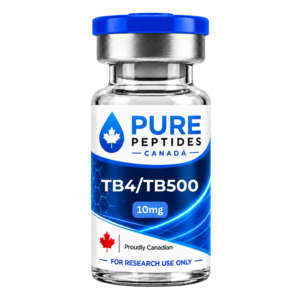

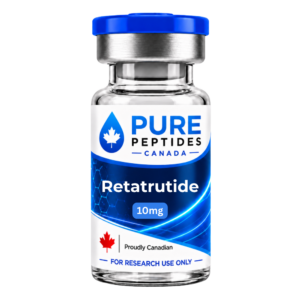


Prices are in Canadian dollars, and orders ship tracked from inside Canada, free over $299. All products are supplied for laboratory research use only and are not for human or veterinary use.
Peptide COA questions
What is a peptide COA?
A peptide certificate of analysis (COA) is a laboratory report on one specific batch of a peptide. It records tests such as mass-spectrometry identity and HPLC purity, together with the batch number, the testing laboratory and the dates the sample was received and the report was issued. It is also called an analysis report or test report.
What should a peptide COA include?
At minimum: the testing laboratory and a report number, the client and sample description, the batch or lot number, the dates, the methods used, an identity result with observed and expected mass, a purity result with its chromatogram, and a verification code or authorized sign-off. Some reports add the amount per vial, water content, counter-ion or endotoxin.
What is the difference between purity and identity on a COA?
Purity, usually measured by HPLC, is the share of the detected material that is the main component. Identity, usually confirmed by mass spectrometry, shows that the molecule has the mass expected from its sequence. A high purity figure does not prove the molecule is the right one, so a complete COA reports both.
Does one COA cover every vial size?
Not necessarily. A report describes the sample that was tested. Identity and purity may carry over to other vials filled from the same batch, but a measured amount per vial applies only to the vial size tested, and a different batch needs its own report. That is why reports are usually listed per vial size and batch.
What if the batch number on the COA does not match my vial?
Treat the report as not applying to your material and ask the supplier for the report that matches your batch. A COA is a record of one batch; applied to another, it is an assumption rather than data.
What does the sample received date on a COA mean?
It is the date the laboratory logged the sample in. The analysis and the report follow it. Together the dates should fit the batch you received: a report issued before the batch was made cannot describe it.
What is net peptide content?
Net peptide content is the share of a freeze-dried powder’s weight that is actually peptide, once residual water and the counter-ion left from purification are accounted for. It is usually lower than the fill weight, and it matters when you need an accurate molar concentration.
Can a COA be faked, and how do I check one?
Yes. A PDF or image can be edited, so check a report rather than take it on trust. Match the batch number to your vial, confirm the laboratory is named and independent, and look the report up on the laboratory’s own website using its report number and verification key. Janoshik Analytical reports can be checked at janoshik.com/verification.
Does a COA prove a peptide is safe?
No. A COA documents the identity and purity of one batch for laboratory purposes. It does not establish safety or suitability for any use, and it covers only the tests it lists, so contaminants such as endotoxin are not assessed unless that test is reported.
Where can I find the COA for a Pure Peptides Canada product?
On our Lab Testing page, which lists the current Janoshik Analytical report for most research products by product, vial size and batch, each with its verification key. Search by compound name or batch code. Reports for earlier batches, and for products not listed, are available on request through our contact page.
Find the report for your batch
Search Janoshik Analytical reports by compound, vial size or batch code on our Lab Testing page. Prices in Canadian dollars, tracked shipping across Canada, and credit and debit cards accepted.
References
- World Health Organization. WHO model certificate of analysis. WHO Technical Report Series No. 1010, Annex 4, 2018. The fields a certificate should record, from the testing laboratory, batch number and date received to test methods, acceptance criteria, numerical results and an authorized signature.
- International Organization for Standardization. ISO/IEC 17025:2017, General requirements for the competence of testing and calibration laboratories. The standard testing laboratories are accredited against.
- D’Hondt M, Bracke N, Taevernier L, Gevaert B, Verbeke F, Wynendaele E, De Spiegeleer B. Related impurities in peptide medicines. Journal of Pharmaceutical and Biomedical Analysis. 2014;101:2–30. A review of the peptide-related impurities that synthesis and storage produce, and how they are detected.
This guide is general educational information about laboratory documentation, not medical, legal or regulatory advice. Products sold by Pure Peptides Canada are for laboratory research use only and are not for human or veterinary use.