

Most contaminants change a peptide’s mass or show up as an extra peak on a certificate of analysis. Endotoxin doesn’t. A trace of it, invisible to HPLC and mass spectrometry, can make immune cells behave as if they had just met bacteria, and in the wrong experiment that matters more than a whole percentage point of purity.
This guide explains what endotoxin is, why tiny amounts matter in cell-culture and inflammation research, how it is measured, and the controls labs use to tell a peptide’s real effect from contamination.
The short answer
- Endotoxin is lipopolysaccharide (LPS) from the outer membrane of Gram-negative bacteria. It is heat-stable, and standard sterile filtration doesn’t reliably remove it.
- Immune cells detect it through the receptor TLR4 at very low concentrations, switching on NF-κB and inflammatory signals such as TNF-α and IL-6.
- That can create, or mask, an effect that has nothing to do with the peptide under study, especially in inflammation research.
- It is measured in endotoxin units (EU) with the LAL test, made from horseshoe crab blood cells, or with newer recombinant factor C methods.
- HPLC and mass spectrometry don’t detect it, and most research-peptide COAs don’t report it. Assays sensitive to inflammation need it checked separately.
What endotoxin is
Gram-negative bacteria, such as E. coli, wrap themselves in an outer membrane studded with lipopolysaccharide. Each LPS molecule has three parts: lipid A, the fatty anchor responsible for most of the toxicity; a core sugar chain; and a variable outer sugar chain called the O-antigen. Bacteria shed LPS as they grow and when they die, so it turns up wherever bacteria have been, including water systems, glassware and the raw materials of chemical manufacturing.
Endotoxin is also remarkably tough. It survives autoclaving, and destroying it on glassware takes dry heat at around 250 °C. Sterile filtration removes bacteria but not reliably their free endotoxin, so a sterile solution can still contain it.
Why trace amounts matter
Mammals evolved to treat LPS as an early warning of infection. On macrophages, monocytes and dendritic cells, it binds a receptor complex built around Toll-like receptor 4 (TLR4). That role was pinned down in 1998, when endotoxin-resistant mouse strains were traced to mutations in the Tlr4 gene, work that contributed to the 2011 Nobel Prize in Physiology or Medicine for Bruce Beutler.
TLR4 activation switches on NF-κB and the release of inflammatory cytokines such as TNF-α and IL-6. Because the system is built to notice small numbers of bacteria, primary immune cells can respond to endotoxin at picogram-to-nanogram concentrations, far below anything a purity test would register.
When endotoxin confounds peptide research
The overlap is uncomfortable for peptide research, because several popular research peptides are studied for exactly the signals endotoxin triggers:
- KPV is studied for dampening NF-κB signalling, the very pathway endotoxin switches on.
- LL-37 binds LPS directly. The 2002 University of British Columbia study that reshaped its reputation reported that it dampened some immune responses to bacterial endotoxin, so contaminating LPS in an LL-37 experiment can be partly neutralized by the peptide itself, muddying results in both directions.
- Thymosin alpha-1 and other immune peptides are tested on exactly the cells most sensitive to endotoxin.
- Repair peptides such as GHK-Cu are often studied in co-cultures where inflammatory signalling shapes the readout.
A contaminated sample can make a peptide look pro-inflammatory when it isn’t, or make a real anti-inflammatory effect look weaker or stronger than it is.
How endotoxin is measured
In the 1950s and 1960s, Frederik Bang and Jack Levin showed that blood cells from the Atlantic horseshoe crab clot in the presence of endotoxin. Their extract, Limulus amebocyte lysate (LAL), became the standard test and comes in three main formats:
- Gel-clot: a yes-or-no result at a set sensitivity.
- Turbidimetric: measures how quickly the sample turns cloudy.
- Chromogenic: measures a colour change, giving a number.
Results are reported in endotoxin units (EU); as a rough guide, one EU corresponds to about 100 picograms of a reference E. coli endotoxin. Newer recombinant factor C (rFC) assays reproduce the first enzyme of the horseshoe crab cascade without harvesting crabs and are now accepted by the European Pharmacopoeia.
One practical catch: peptides themselves can enhance or inhibit these assays. A valid result requires a spike-recovery control, in which a known amount of endotoxin added to the sample is recovered as expected.
What HPLC and mass spectrometry can’t see
HPLC measures how much of a sample is the target peptide relative to other UV-absorbing material. Mass spectrometry confirms the peptide’s molecular weight. Endotoxin is a large, variable molecule that clumps into aggregates, and at the trace levels that matter biologically it doesn’t appear as a peak in either test. A peptide can be 99% pure by HPLC, have exactly the right mass, and still carry enough endotoxin to activate immune cells.
| Question | Test | On a typical research COA? |
|---|---|---|
| Is it the right molecule? | Mass spectrometry | Usually |
| How pure is it? | HPLC | Usually |
| Are there live microbes? | Sterility testing | Rarely |
| How much endotoxin? | LAL or recombinant factor C | Rarely |
See our HPLC testing guide for what purity numbers do measure, and how research peptides are made for where other impurities come from. If your assays are sensitive to endotoxin, put it on your list of questions to ask a peptide supplier in Canada.
Controls researchers use
When endotoxin can’t be fully excluded, labs use controls to unmask it:
- Measure it. An LAL or rFC result on the actual lot, with spike recovery, is the most direct answer.
- Polymyxin B. This antibiotic binds lipid A and neutralizes many endotoxins. If adding it abolishes an effect, contamination is a suspect, although polymyxin B has effects of its own and doesn’t neutralize every LPS type.
- TLR4-deficient cells or TLR4 blockers. An effect that disappears without TLR4 signalling points to endotoxin.
- Vehicle controls. Water, buffers and solvents prepared the same way can carry endotoxin too.
- Endotoxin-free consumables. Use certified endotoxin-free water and plasticware, and depyrogenate glassware.
One classic trick needs care with peptides. Heating destroys the activity of most proteins but not endotoxin, so heat-stable effects suggest contamination. Many short peptides have no folded structure to destroy, though, so a heat test tells you little about them.
Immune and inflammation research peptides, each with a batch-matched COA.
View LL-37Sourcing with endotoxin in mind
Most research-peptide COAs report identity and purity, not endotoxin. If your work involves immune cells, inflammation readouts or primary cell culture:
- Ask whether endotoxin data exist for the specific lot.
- Consider an independent LAL or rFC test on the lot you use, and keep the result with your records.
- Prepare solutions with endotoxin-free water and consumables.
- Report endotoxin status in your methods, so others can interpret your results.
 LL-37Binds LPS directlyView product and COA
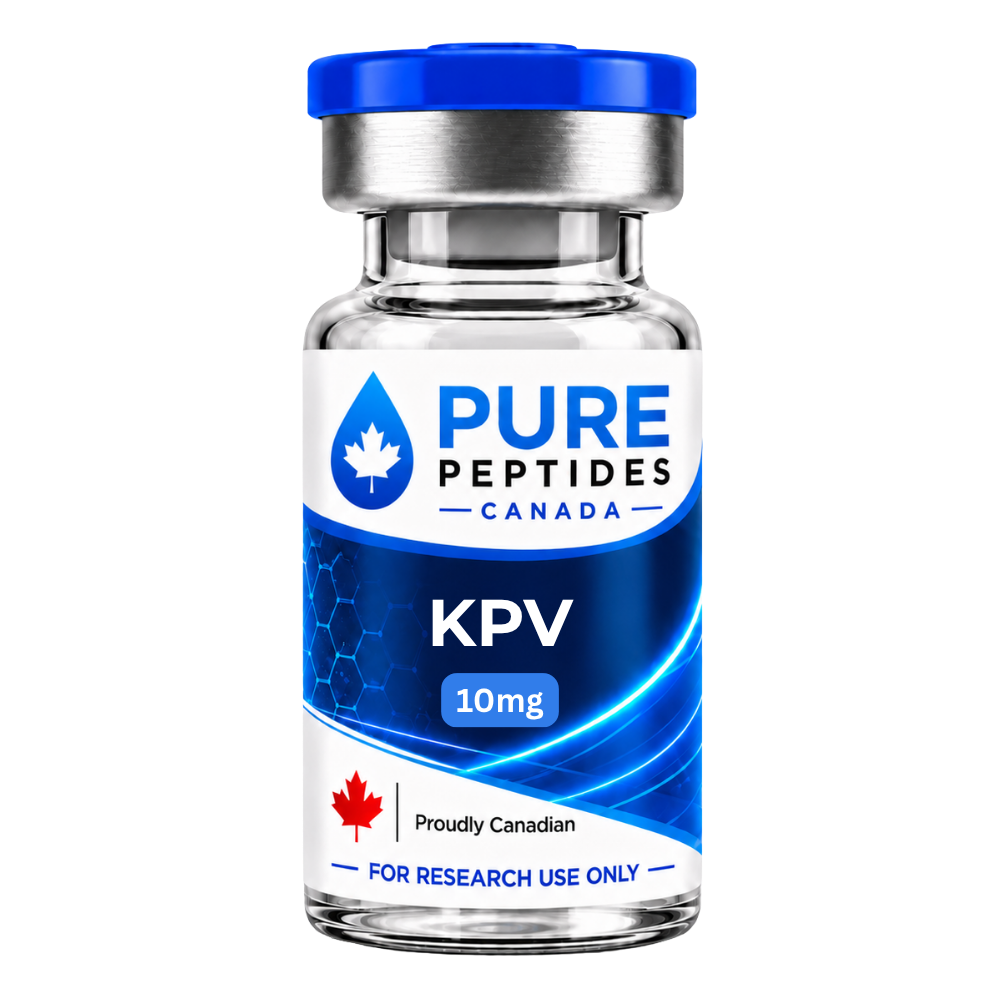 KPVStudied for NF-κB signallingView product and COA
 Thymosin alpha-1Thymic immune peptideView product and COA
 GHK-Cu + KPVRepair plus inflammatory signallingView product and COA
Research use only. Peptides from Pure Peptides Canada are laboratory reagents for in-vitro research. They are not sterile or endotoxin-certified products, they are not approved drugs, they are not for human or veterinary use, and nothing in this article is dosing or medical guidance.
Frequently asked questions
What is endotoxin?
Endotoxin is lipopolysaccharide (LPS), a component of the outer membrane of Gram-negative bacteria such as E. coli. It is released when bacteria grow or die, it is heat-stable, and immune cells react to it at very low concentrations.
Is an endotoxin-free product the same as a sterile one?
No. Sterility means no living microorganisms, while endotoxin comes from bacteria, living or dead. A solution can be sterile and still contain endotoxin, because standard sterile filtration doesn’t reliably remove it.
Does HPLC or mass spectrometry detect endotoxin?
No. HPLC measures peptide purity and mass spectrometry confirms identity. Endotoxin needs its own test, such as the LAL assay or a recombinant factor C assay.
How is endotoxin measured?
With the Limulus amebocyte lysate (LAL) test, made from horseshoe crab blood cells, or with recombinant factor C methods that don’t use crab blood. Results are reported in endotoxin units (EU).
Why does endotoxin matter in peptide research?
Immune cells detect endotoxin through TLR4 and respond with inflammatory signals. In cell-culture or inflammation experiments, contamination can create or mask effects that have nothing to do with the peptide being studied.
Do research peptide COAs include endotoxin testing?
Most don’t. They typically report purity by HPLC and identity by mass spectrometry. Researchers running endotoxin-sensitive assays should ask for lot data or test independently.
Research peptides for immune and inflammation work
Independently tested for identity and purity, matched to your lot, with tracked delivery across Canada and pricing in Canadian dollars.
References
- Raetz CRH, Whitfield C. Lipopolysaccharide endotoxins. Annu Rev Biochem. 2002;71:635–700.
- Poltorak A, He X, Smirnova I, et al. Defective LPS signaling in C3H/HeJ and C57BL/10ScCr mice: mutations in Tlr4 gene. Science. 1998;282(5396):2085–2088.
- The Nobel Prize in Physiology or Medicine 2011. NobelPrize.org
- Levin J, Bang FB. The role of endotoxin in the extracellular coagulation of Limulus blood. Bull Johns Hopkins Hosp. 1964;115:265–274.
- Scott MG, Davidson DJ, Gold MR, Bowdish D, Hancock REW. The human antimicrobial peptide LL-37 is a multifunctional modulator of innate immune responses. J Immunol. 2002;169(7):3883–3891.
For laboratory research use only. Not for human or veterinary use. This article explains laboratory science for educational purposes and is not medical advice.