
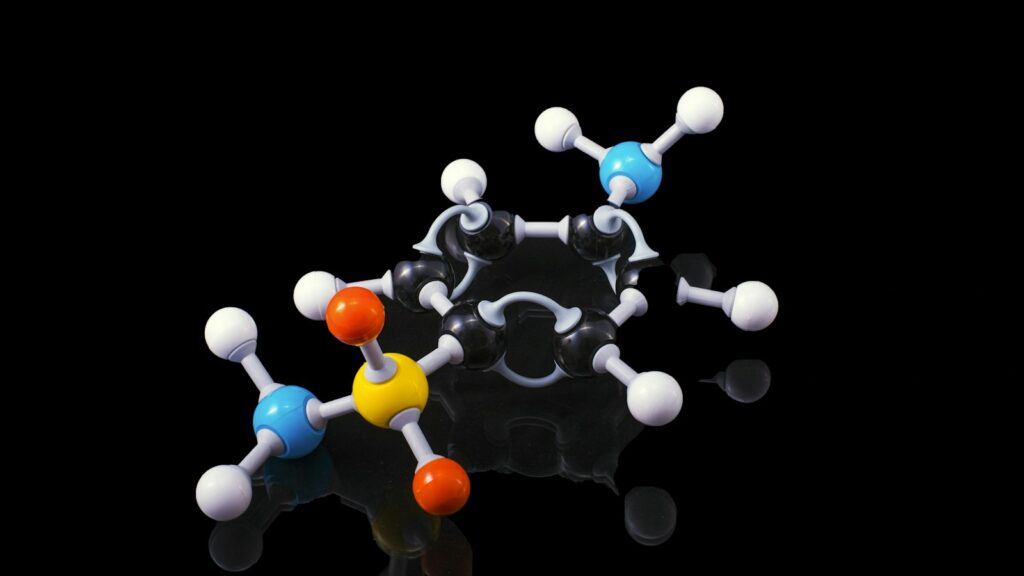
The peptides that make headlines tend to be long: semaglutide has 31 amino acids and thymosin beta-4 has 43. Some of the most studied peptides in biology are far smaller. Glutathione, the main low-molecular-weight thiol inside cells, has three amino acids. So does GHK, the copper-binding peptide found in human plasma. The sweetener aspartame is built on just two.
This guide explains how short peptides are named and counted, where the line between an oligopeptide and a polypeptide falls, which short peptides matter in research, and why their small size changes how they behave in cells and in the lab.
The short answer
- A dipeptide is two amino acids joined by one peptide bond, a tripeptide is three joined by two, and a tetrapeptide is four joined by three. A peptide with n amino acids has n − 1 peptide bonds.
- An oligopeptide is a peptide made of “a few” amino acids. There is no hard cut-off: IUPAC’s nomenclature recommendations say peptides with fewer than about 10 to 20 residues may be called oligopeptides, while its Gold Book defines polypeptides as having ten or more.
- The 20 standard amino acids can form 400 different dipeptides and 8,000 different tripeptides.
- Well-known short peptides include glutathione (γ-Glu-Cys-Gly), the hormone TRH (pGlu-His-Pro-NH2), GHK (Gly-His-Lys), KPV (Lys-Pro-Val), carnosine (β-alanyl-histidine) and aspartame, a dipeptide methyl ester.
- Small size changes behaviour. Di- and tripeptides have their own transporters into cells, and very polar short peptides are hard to hold on a standard HPLC column.
Short peptides at a glance
Example: GHK, a tripeptide found in human plasma.
- G
- H
- K
Three amino acids, two peptide bonds and a molecular weight of about 340 g/mol. GHK binds copper(II) tightly, which is why it is usually studied as GHK-Cu.
- Dipeptide
- 2 residues · 1 peptide bond · 400 possible sequences
- Tripeptide
- 3 residues · 2 peptide bonds · 8,000 possible sequences
- Tetrapeptide
- 4 residues · 3 peptide bonds · 160,000 possible sequences
- Oligopeptide
- “A few” residues, with no fixed upper limit (roughly up to 10 to 20)
- Polypeptide
- Longer chains; IUPAC’s Gold Book says ten or more residues
How short peptides are named
Peptides are named by counting their amino acids, or residues. IUPAC’s nomenclature rules put a multiplying prefix in front of “peptide” to give the total number of residues: a dipeptide has two, a tripeptide three, a tetrapeptide four, then pentapeptide, hexapeptide and so on. Because the higher prefixes are unfamiliar, the same rules allow numbers instead, so a peptide of 22 residues can simply be called a 22-peptide.
Each peptide bond joins the carboxyl group of one amino acid to the amino group of the next and releases a molecule of water, so a chain of n amino acids always has n − 1 peptide bonds. Order matters: Gly-His-Lys and Lys-His-Gly are different molecules. Sequences are written from the free amino end, the N-terminus, to the free carboxyl end, the C-terminus. Our amino acid codes chart lists the one- and three-letter abbreviations used in this guide.
| Name | Amino acids | Peptide bonds | Possible sequences from 20 amino acids | Example |
|---|---|---|---|---|
| Dipeptide | 2 | 1 | 400 | Thymogen (Glu-Trp) |
| Tripeptide | 3 | 2 | 8,000 | Glutathione, GHK, KPV, TRH |
| Tetrapeptide | 4 | 3 | 160,000 | Epitalon (Ala-Glu-Asp-Gly) |
| Pentapeptide | 5 | 4 | 3.2 million | Leu-enkephalin (Tyr-Gly-Gly-Phe-Leu) |
| Nonapeptide | 9 | 8 | About 512 billion | Oxytocin |
The counts assume only the 20 standard amino acids. Natural short peptides such as carnosine also use non-standard building blocks like β-alanine, so the real variety is larger still.
Oligopeptide or polypeptide: where is the line?
“Oligo” means “a few”, and IUPAC itself says the limits of the prefix are not precisely defined. Its 1983 recommendations on amino acid and peptide nomenclature, drawn up with the International Union of Biochemistry, say that peptides with fewer than about 10 to 20 residues may be called oligopeptides and those with more, polypeptides. The IUPAC Gold Book’s definition of a polypeptide is sharper: a peptide containing ten or more amino acid residues.
The boundary between a polypeptide and a protein is just as soft. The same recommendations note that polypeptides of defined sequence longer than about 50 residues are usually called proteins, while acknowledging that authors differ greatly on where they start using the term. In practice, “oligopeptide” covers anything from two residues up to roughly 10 to 20, and context matters more than the count. Our pillar guide, what are peptides?, covers the difference between peptides and proteins in more depth.
Short peptides worth knowing
A handful of di- and tripeptides account for a surprising share of peptide biology, food chemistry and laboratory research.
| Peptide | Sequence | Molecular weight | Why it matters |
|---|---|---|---|
| Carnosine | β-Ala-His (dipeptide) | 226.2 g/mol | Discovered in meat extract in 1900 by Gulewitsch and Amiradžibi. Abundant in skeletal muscle and also found in other excitable tissues such as the brain. |
| Aspartame | Asp-Phe methyl ester (dipeptide) | 294.3 g/mol | A sweetener discovered by chemist James Schlatter at G.D. Searle, whose patent for “peptide sweetening agents” was filed in 1966. |
| Glutathione | γ-Glu-Cys-Gly (tripeptide) | 307.3 g/mol | The main low-molecular-weight thiol in cells, present at about 1 to 10 mM. Its first bond is unusual; see below. |
| TRH | pGlu-His-Pro-NH2 (tripeptide) | 362.4 g/mol | Thyrotropin-releasing hormone. Its structure was solved in 1969 by the Schally and Guillemin groups; Guillemin and Schally shared half of the 1977 Nobel Prize in Physiology or Medicine for their discoveries on the brain’s peptide hormones. |
| GHK | Gly-His-Lys (tripeptide) | 340.4 g/mol | Isolated from human plasma in 1973 by Pickart and Thaler. It binds copper(II) tightly, forming GHK-Cu; see our GHK-Cu guide. |
| KPV | Lys-Pro-Val (tripeptide) | 342.4 g/mol | The C-terminal end of the hormone α-MSH (residues 11 to 13), studied in inflammation research. |
| VPP and IPP | Val-Pro-Pro and Ile-Pro-Pro (tripeptides) | 311.4 and 325.4 g/mol | Released from milk casein during fermentation; they inhibit the enzyme ACE in test-tube studies. Their effect on blood pressure in human trials has been small and inconsistent. |
Molecular weights are average masses calculated from each sequence’s chemical formula.
The St. Petersburg “bioregulators”
A separate group of very short peptides comes from Vladimir Khavinson’s group in St. Petersburg, which promotes di-, tri- and tetrapeptides as gene-regulating “bioregulators”. Examples include the dipeptides Vilon (Lys-Glu) and thymogen (Glu-Trp), which was registered as a medicine in the USSR in 1990, the tripeptide pinealon (Glu-Asp-Arg) and the tetrapeptide epitalon (Ala-Glu-Asp-Gly). Most of this literature comes from one group, and much of it is cell, animal or computer-modelling work, so it has had little independent replication. Our guides to epitalon, pinealon and thymus peptides cover the evidence compound by compound.
Glutathione and its unusual bond
Glutathione is the best-known tripeptide in biology, and it breaks a rule. In an ordinary peptide bond, an amino acid’s main (alpha) carboxyl group links to the next residue. In glutathione, glutamate links to cysteine through the carboxyl group at the end of its side chain, the gamma position, which is why it is written γ-Glu-Cys-Gly.
Ordinary peptidases cannot cut that gamma bond. Breaking it takes a dedicated enzyme, γ-glutamyl transferase, which releases glutamate and the dipeptide Cys-Gly. The thiol group on the cysteine is what makes glutathione an antioxidant and detoxifying molecule. It is present at roughly 1 to 10 mM in mammalian cells, and under normal conditions more than 98% of it is in the reduced form, GSH, rather than the oxidized disulfide form, GSSG.
Reduced glutathione (GSH) is available as a laboratory reagent for in-vitro research.
View glutathioneHow cells handle short peptides
Dedicated transporters. Most peptides are too large and too polar to cross a cell membrane on their own, but di- and tripeptides have their own carriers. The proton-coupled transporters PepT1 (encoded by the gene SLC15A1) and PepT2 (SLC15A2) can move essentially every possible di- and tripeptide, whatever its charge, along with many peptide-like drugs. PepT1 is the high-capacity, lower-affinity carrier on the absorptive surface of the small intestine. PepT2 is the high-affinity, lower-capacity carrier found in the kidney’s proximal tubule and the choroid plexus. Neither carries free amino acids, and longer peptides are generally not substrates. In cell studies, the tripeptide KPV entered intestinal cells through PepT1; see our KPV research guide.
Enzymes that trim from the ends. Many peptidases work by snipping one, two or three residues from the end of a chain. The best-known example is dipeptidyl peptidase-4, or DPP-4, which removes the first two amino acids when the second is proline or alanine. That single cut inactivates the gut hormones GLP-1, which loses His-Ala, and GIP, which loses Tyr-Ala. Our guides to GIP and GLP-1 peptides explain why drug designers had to block it.
Short peptides in the lab
Diketopiperazines. The first two amino acids of a peptide can fold back and react with each other, cutting themselves off as a small ring-shaped dipeptide called a diketopiperazine. This spontaneous reaction happens most often when the second residue is proline and the N-terminus is free, and it is one of the routes by which short peptides degrade in solution. Our guide to how peptides degrade covers the other common pathways.
HPLC. Reversed-phase HPLC separates peptides by how strongly they cling to a water-repelling stationary phase. Very small, polar peptides are barely retained and can elute almost at once, alongside other polar compounds, which makes them hard to resolve. Short peptides with water-repelling side chains are retained normally, and hydrophilic interaction chromatography (HILIC) is an alternative for the most polar ones. Our guide to reading an HPLC chromatogram explains retention time and why early peaks need care.
Mass spectrometry. Short peptides give simple spectra, but not always a single ion. How many charges a peptide picks up in electrospray depends on its basic residues: a tripeptide with no arginine, lysine or histidine is usually seen as the singly charged [M+H]+ ion, while one carrying a basic residue can also appear doubly charged. KPV, for example, is expected at m/z 343.2 as [M+H]+. See how to read a peptide mass spectrum.
Counter-ions weigh more, relatively. Synthetic peptides are usually supplied as salts, with acetate or trifluoroacetate (TFA) bound to their basic groups. In a tripeptide of about 340 g/mol, each counter-ion is a large share of the weighed powder, so net peptide content matters more than it does for a large peptide. Our guide to net peptide content shows the arithmetic.
What’s established and what isn’t
Reasonably well established
- The naming rules and the arithmetic: n − 1 peptide bonds, 400 dipeptides and 8,000 tripeptides.
- PepT1 and PepT2 carry di- and tripeptides across membranes, and DPP-4 inactivates GLP-1 and GIP.
- Glutathione’s gamma linkage and its central role as a cellular thiol.
- TRH is a tripeptide hormone made in the hypothalamus.
Open questions
- Many reported effects of short research peptides come only from cell and animal studies.
- The St. Petersburg bioregulator literature has had little independent replication.
- Food-derived peptides such as VPP and IPP have shown small, inconsistent effects in human trials.
- How much of a short peptide survives intact in a complex biological system varies widely with its sequence.
Sourcing short research peptides in Canada
Short peptides are simpler to make than long ones, but they come with their own pitfalls. Before ordering, check that:
- The identity data fit the exact sequence. Gly-His-Lys and Lys-His-Gly have identical masses, so a mass spectrum confirms composition but not order. Telling them apart takes fragmentation data (MS/MS) or HPLC comparison with a reference standard. See our COA guide.
- The HPLC method actually retains the peptide. A very polar tripeptide that elutes with the solvent front can co-elute with impurities, which makes the purity figure unreliable.
- Net peptide content is stated or can be worked out, because counter-ions are a large share of a small peptide’s weight.
- The batch number on the certificate matches your vial, and the peptide is stored cold and dry. See our peptide storage guide.
 GHK-CuCopper-binding tripeptideView product
 KPVα-MSH-derived tripeptideView product
 Glutathioneγ-Glu-Cys-Gly tripeptideView product
 PinealonGlu-Asp-Arg tripeptideView product
Research use only. Pure Peptides Canada products are laboratory reagents for in-vitro research, not for human or veterinary use. This article explains peptide chemistry and published research for education; it is not medical, dietary or dosing guidance.
Frequently asked questions
What is a tripeptide?
A tripeptide is a peptide made of three amino acids joined by two peptide bonds. Examples include glutathione (γ-Glu-Cys-Gly), the hormone TRH (pGlu-His-Pro-NH2), GHK (Gly-His-Lys) and KPV (Lys-Pro-Val).
What is a dipeptide?
A dipeptide is two amino acids joined by one peptide bond. Carnosine (β-alanyl-L-histidine), found in muscle, and the Asp-Phe core of the sweetener aspartame are well-known examples. The 20 standard amino acids can form 400 different dipeptides.
What is an oligopeptide?
An oligopeptide is a peptide made of a few amino acids. There is no strict cut-off: IUPAC’s nomenclature recommendations say peptides with fewer than about 10 to 20 residues may be called oligopeptides, while its Gold Book defines polypeptides as having ten or more residues.
How many peptide bonds does a tripeptide have?
Two. A peptide with n amino acids has n − 1 peptide bonds, so a dipeptide has one, a tripeptide two and a tetrapeptide three.
Is glutathione a peptide?
Yes. Glutathione is a tripeptide of glutamate, cysteine and glycine. It is unusual because glutamate is linked through its side-chain (gamma) carboxyl group, so it is written γ-Glu-Cys-Gly and resists ordinary peptidases.
How many tripeptides are possible?
With the 20 standard amino acids there are 20 × 20 × 20 = 8,000 possible tripeptides, and 400 possible dipeptides. Non-standard amino acids such as β-alanine increase the number further.
Why are short peptides hard to analyze by HPLC?
Very small, polar peptides interact weakly with the reversed-phase columns used for most peptide analysis, so they can elute almost immediately alongside other polar compounds. Short peptides with water-repelling side chains are retained normally, and HILIC columns are an alternative for the most polar ones.
Short peptides for laboratory research
Research-grade tripeptides and other short peptides, priced in Canadian dollars and shipped tracked from inside Canada.
References
- IUPAC-IUB Joint Commission on Biochemical Nomenclature. Nomenclature and symbolism for amino acids and peptides (Recommendations 1983). Pure Appl Chem. 1984;56(5):595–624. IUPAC
- IUPAC. Polypeptides. Compendium of Chemical Terminology (the Gold Book). DOI
- Freeman HJ. Clinical relevance of intestinal peptide uptake. World J Gastrointest Pharmacol Ther. 2015;6(2):22–27. DOI
- Vašková J, Kočan L, Vaško L, Perjési P. Glutathione-related enzymes and proteins: a review. Molecules. 2023;28(3):1447. DOI
- Boldyrev AA, Aldini G, Derave W. Physiology and pathophysiology of carnosine. Physiol Rev. 2013;93(4):1803–1845. DOI
- Schlatter JM. Peptide sweetening agents. US Patent 3,492,131. Filed 1966; granted 1970.
- Boler J, Enzmann F, Folkers K, Bowers CY, Schally AV. The identity of chemical and hormonal properties of the thyrotropin releasing hormone and pyroglutamyl-histidyl-proline amide. Biochem Biophys Res Commun. 1969;37(4):705–710.
- Pickart L, Thaler MM. Tripeptide in human serum which prolongs survival of normal liver cells and stimulates growth in neoplastic liver. Nat New Biol. 1973;243(124):85–87.
- Pickart L, Margolina A. Regenerative and protective actions of the GHK-Cu peptide in the light of the new gene data. Int J Mol Sci. 2018;19(7):1987. DOI
- Dalmasso G, Charrier-Hisamuddin L, Nguyen HTT, et al. PepT1-mediated tripeptide KPV uptake reduces intestinal inflammation. Gastroenterology. 2008;134(1):166–178. DOI
- Smith DE, Clémençon B, Hediger MA. Proton-coupled oligopeptide transporter family SLC15: physiological, pharmacological and pathological implications. Mol Aspects Med. 2013;34(2-3):323–336. DOI
- Daniel H, Kottra G. The proton oligopeptide cotransporter family SLC15 in physiology and pharmacology. Pflugers Arch. 2004;447(5):610–618. DOI
- Mentlein R, Gallwitz B, Schmidt WE. Dipeptidyl-peptidase IV hydrolyses gastric inhibitory polypeptide, glucagon-like peptide-1(7-36)amide, peptide histidine methionine and is responsible for their degradation in human serum. Eur J Biochem. 1993;214(3):829–835.
- Zhang ZC, Hales DA, Clemmer DE. Influence of N-terminus amino acid on peptide cleavage in solution through diketopiperazine formation. J Am Soc Mass Spectrom. 2022;33(8):1368–1376. DOI
- Mant CT, Jiang Z, Boyes BE, Hodges RS. An improved approach to hydrophilic interaction chromatography of peptides. J Chromatogr A. 2013;1277:15–25. DOI
- Fekete ÁA, Givens DI, Lovegrove JA. Casein-derived lactotripeptides reduce systolic and diastolic blood pressure in a meta-analysis of randomised clinical trials. Nutrients. 2015;7(1):659–681. DOI
- Usinger L, Reimer C, Ibsen H. Fermented milk for hypertension. Cochrane Database Syst Rev. 2012;CD008118. DOI
- Deigin VI, Vinogradova YE, Vinogradov DL, et al. Thymodepressin—unforeseen immunosuppressor. Molecules. 2021;26(21):6550. DOI
- Gulewitsch W, Amiradžibi S. Ueber das Carnosin, eine neue organische Base des Fleischextractes. Ber Dtsch Chem Ges. 1900;33:1902–1903. DOI
- IUPAC. Oligo. Compendium of Chemical Terminology (the Gold Book). DOI
- Schally AV. Aspects of hypothalamic regulation of the pituitary gland. Nobel Lecture, December 8, 1977. Nobel Prize
- Hiltz ME, Lipton JM. Antiinflammatory activity of a COOH-terminal fragment of the neuropeptide alpha-MSH. FASEB J. 1989;3(11):2282–2284.
- Khavinson VK, Popovich IG, Linkova NS, Mironova ES, Ilina AR. Peptide regulation of gene expression: a systematic review. Molecules. 2021;26(22):7053. DOI
- Arutjunyan A, Kozina L, Stvolinskiy S, et al. Pinealon protects the rat offspring from prenatal hyperhomocysteinemia. Int J Clin Exp Med. 2012;5(2):179–185.
For laboratory research use only. Not for human or veterinary use. This article summarizes published research and chemistry for educational purposes and is not medical advice.