
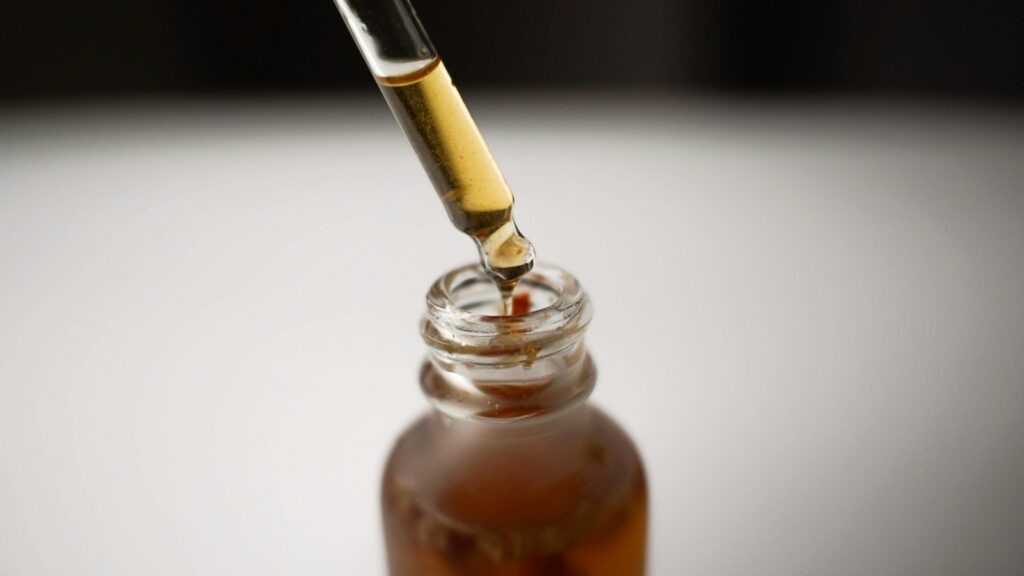
A peptide that leaves the synthesizer pure does not stay pure on its own. Water, oxygen, heat, light and time all work on it, and some amino-acid sequences are far more vulnerable than others. Knowing the main degradation pathways explains nearly all the storage advice researchers follow, and what to look for when a peptide is re-tested.
This guide covers the chemical and physical ways peptides break down, which sequences are most at risk, how each change shows up in analytical testing, and the handling habits that slow it down.
The short answer
- Peptides degrade chemically, when bonds change, and physically, when molecules clump together or stick to surfaces.
- The main chemical routes are oxidation (methionine, cysteine, tryptophan), deamidation (asparagine, fastest before glycine), aspartimide and isoaspartate formation (aspartic acid, especially Asp-Gly), hydrolysis (notably Asp-Pro bonds) and N-terminal cyclization.
- Most of these reactions need water and speed up with heat, which is why dry, lyophilized powder stored cold lasts far longer than a solution.
- Some changes are invisible to mass spectrometry because isomers have the same mass. HPLC catches many of them as new peaks.
Chemical vs physical degradation
Chemical degradation changes the molecule itself: an oxygen atom is added, an amide group is lost, a bond is cut or rearranged. The result is a different molecule, sometimes inactive, sometimes with a different activity. Physical degradation leaves each molecule intact but changes how they behave together: they aggregate into clumps or fibrils, or they stick to the walls of a vial or pipette tip, so less of the peptide is available in solution.
The main pathways at a glance
| Pathway | Most at risk | Mass change | Best detected by |
|---|---|---|---|
| Oxidation | Methionine, cysteine, tryptophan, histidine | +16 per oxygen | Mass spectrometry; often a separate HPLC peak |
| Deamidation | Asparagine, fastest when followed by glycine; glutamine more slowly | About +1 | HPLC; high-resolution mass spectrometry |
| Aspartimide and isoaspartate | Aspartic acid, especially Asp-Gly and Asp-Ser | −18 for the ring intermediate; 0 for isoaspartate | HPLC (isomers have identical mass) |
| Hydrolysis | Asp-Pro bonds, especially at acidic pH | Fragments | Mass spectrometry and HPLC |
| N-terminal cyclization | N-terminal glutamine (pyroglutamate); N-terminal dipeptides with proline (diketopiperazines) | −17 for pyroglutamate from Gln; loss of two residues for diketopiperazine | Mass spectrometry |
| Disulfide problems | Free cysteines | Dimers and mismatched bridges | Mass spectrometry and HPLC |
| Aggregation | Hydrophobic or highly concentrated peptides | None | Cloudiness; HPLC and size-based methods |
| Adsorption | Dilute, sticky or highly charged peptides | None; peptide is lost to surfaces | Quantification against a standard |
The asparagine findings go back to classic work by Geiger and Clarke, published in 1987, who showed that deamidation at Asn-Gly sequences proceeds through a ring-shaped succinimide intermediate, the same intermediate that turns aspartic acid into its isoaspartate isomer.
Examples from real peptides
- DSIP contains an aspartic acid. In the original 1978 work, only the normal α-aspartyl form was active, while its β-aspartyl isomer, which has exactly the same mass, was not. See our DSIP guide.
- Epitalon, Ala-Glu-Asp-Gly, ends in an Asp-Gly pair, the classic aspartimide-prone motif. See our Epitalon guide.
- VIP, Semax, Argireline and SNAP-8 all contain methionine, the most easily oxidized residue. A COA mass 16 g/mol above expected is the usual sign. See our VIP guide.
 DSIPContains an isomer-prone aspartateView product and COA
 EpitalonEnds in an Asp-Gly pairView product and COA
 SemaxBegins with methionineView product and COA
Why water and heat matter most
Deamidation, aspartimide formation and hydrolysis all involve water, and nearly every degradation reaction runs faster as temperature rises. Freeze-drying, or lyophilization, removes most of the water, which is why research peptides ship as dry powder rather than solutions. A sealed lyophilized vial stored cold, dry and away from light is the most stable form a peptide has. Once it is dissolved, the clock speeds up.
pH matters too. Deamidation tends to accelerate at neutral and basic pH, while Asp-Pro bonds are most fragile under acidic conditions, so the right buffer depends on the sequence.
Every peptide we ship is lyophilized and tested batch by batch.
Read the storage guideHandling habits that slow degradation
For in-vitro laboratory work, a few habits prevent most avoidable losses:
- Keep powder sealed, cold and dry until it is needed, and let a cold vial reach room temperature before opening so moisture does not condense on the cake.
- Avoid repeated freeze-thaw cycles. Divide solutions into single-use aliquots rather than refreezing one vial.
- Protect oxidation-prone sequences containing methionine, cysteine or tryptophan from air and light, for example with degassed buffers.
- Choose the buffer for the sequence, since the riskiest pH depends on which weak points a peptide has.
- Use low-binding tubes for dilute solutions to reduce losses to surfaces.
For concentration maths when you prepare solutions, see our peptide calculator.
How degradation shows up on a re-test
When a stored peptide is re-analyzed, degradation usually appears in one of two ways. On HPLC, new peaks appear next to the main peak and the purity figure drops. On mass spectrometry, new masses appear: +16 for oxidation, about +1 for deamidation, fragments for cleavage. Isomers such as isoaspartate are the exception: they have the same mass as the original, so only chromatography separates them. That is why a good certificate reports both methods. Our HPLC testing guide and peptide COA guide explain how to read them.
Reasonably well established
- The main chemical degradation pathways and the residues they target.
- Water, heat and pH drive most of them.
- Lyophilized, cold, dry storage slows them dramatically.
Peptide-specific questions
- Exact shelf life, which depends on sequence, salt form and storage.
- Which degradation products keep activity and which do not.
- How aggregation-prone a given sequence is at working concentrations.
Research use only. Pure Peptides Canada products are laboratory reagents, not for human or veterinary use. The handling notes above apply to in-vitro laboratory work, and nothing here is dosing, administration or medical guidance.
Frequently asked questions
Why do peptides degrade?
Peptides react with water, oxygen and light, and those reactions speed up with heat. Chemical routes such as oxidation, deamidation and hydrolysis change the molecule, while physical routes such as aggregation and adsorption reduce how much usable peptide remains in solution.
Which amino acids make a peptide least stable?
Methionine, cysteine and tryptophan oxidize easily; asparagine deamidates, especially before glycine; aspartic acid forms aspartimide and isoaspartate, especially in Asp-Gly sequences; and Asp-Pro bonds are prone to cleavage in acid.
Why do lyophilized peptides last longer?
Freeze-drying removes most of the water that hydrolysis, deamidation and aspartimide formation need, so the dry powder degrades far more slowly than a solution, especially when kept cold, dry and away from light.
Does freezing a peptide solution stop degradation?
It slows it but does not stop it, and repeated freeze-thaw cycles can themselves promote aggregation. Single-use aliquots avoid refreezing the same solution.
Can mass spectrometry detect all degradation?
No. It detects changes in mass, such as +16 for oxidation, but isomers like isoaspartate have the same mass as the original peptide. HPLC is needed to separate those.
How can I tell if a peptide has degraded?
Re-test it. New HPLC peaks with a lower purity figure, or new masses on mass spectrometry, are the usual signs. Visible cloudiness in a solution can indicate aggregation.
Stable from our shelf to yours
Research peptides shipped lyophilized, each batch independently tested for purity and identity, priced in Canadian dollars and tracked across Canada.
References
- Manning MC, Chou DK, Murphy BM, Payne RW, Katayama DS. Stability of protein pharmaceuticals: an update. Pharm Res. 2010;27(4):544–575.
- Geiger T, Clarke S. Deamidation, isomerization, and racemization at asparaginyl and aspartyl residues in peptides. J Biol Chem. 1987;262(2):785–794.
- Schoenenberger GA, et al. The delta EEG (sleep)-inducing peptide (DSIP). XI. Amino-acid analysis, sequence, synthesis and activity of the nonapeptide. Pflügers Arch. 1978. PubMed
For laboratory research use only. Not for human or veterinary use. This article is educational and is not medical advice.