
Description
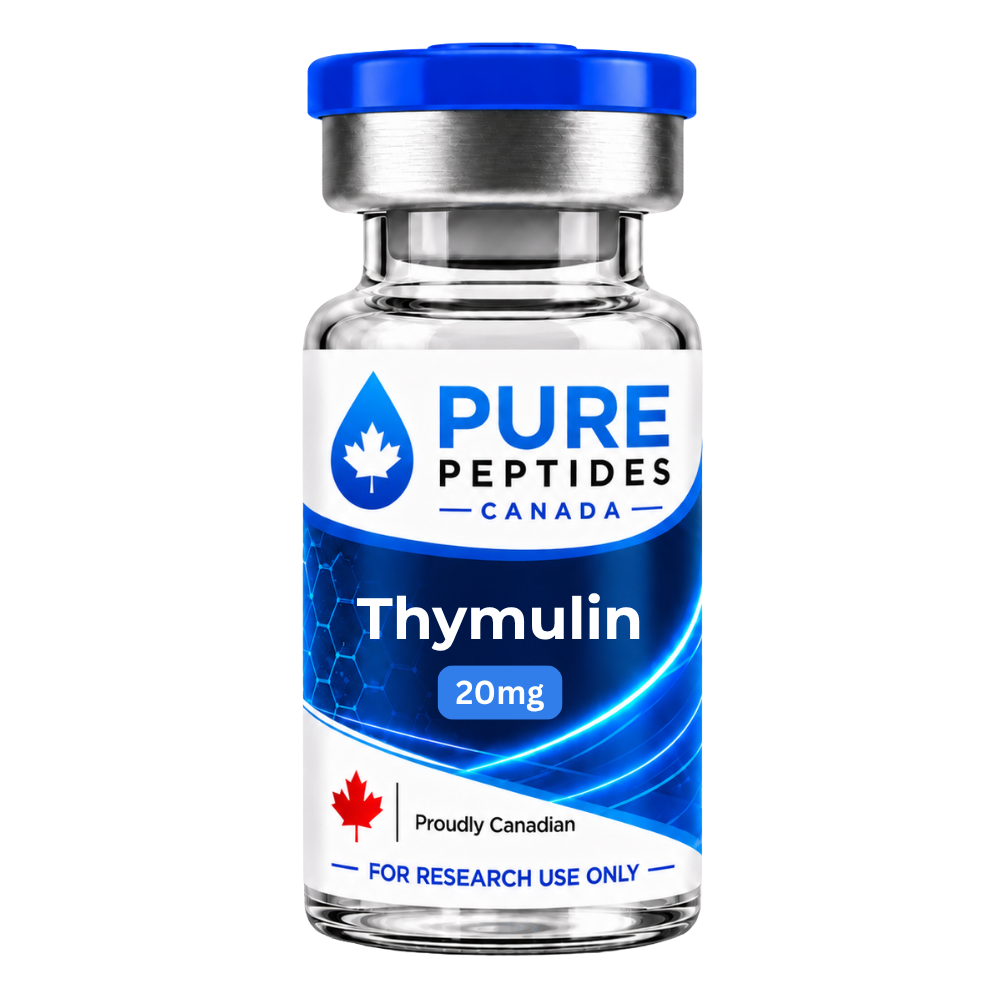
Thymulin is a nine-residue hormone secreted by thymic epithelial cells that becomes biologically active only when bound to zinc. Discovered in Paris in the 1970s as “serum thymic factor”, it is a classic tool for studying thymic endocrine function. Pure Peptides Canada supplies it as a lyophilized research reagent in 10 mg vials, with an independent Janoshik HPLC and mass-spectrometry report, CAD pricing and tracked shipping from inside Canada.
Thymulin at a glance
- What it is: pGlu-Ala-Lys-Ser-Gln-Gly-Gly-Ser-Asn, a nonapeptide that forms an active 1:1 complex with zinc.
- What researchers study: T-cell differentiation, thymic hormone decline with age and zinc status, and links between the thymus, the nervous system and inflammation.
- Evidence level: cell and animal studies over five decades. No approved medicine.
- Supplied as: sealed lyophilized powder, 10 mg, single vial or box of 10.
- Delivery: ships from inside Canada by tracked Xpresspost in 3–7 days ($25 CAD), or free in 4–12 days on orders over $299.
Thymulin
Facteur thymique sérique (FTS) · serum thymic factor · zinc-thymulin
- pGlu
- A
- K
- S
- Q
- G
- G
- S
- N
- Zn²⁺
Blue: N-terminal pyroglutamate. Dashed: the zinc ion required for biological activity.
- Length
- 9 amino acids
- Molecular formula
- C33H54N12O15 (zinc-free peptide)
- Molecular weight
- ≈ 859 g/mol (zinc-free peptide)
- CAS number
- 63958-90-7
- Source
- Thymic epithelial cells
- Form
- Lyophilized powder, sealed vial
- Sizes
- 10 mg (single or box of 10)
- SKU
- PP-THYMULIN
Where the evidence stands
- Cell studies
- Animal models
- Controlled human trials
- Approved medicine
Thymulin research is preclinical. It is not an approved medicine anywhere.
What is thymulin?
In the 1970s, Jean-François Bach and Mireille Dardenne in Paris identified a factor in blood that disappeared when the thymus was removed and that induced T-cell markers on immature cells. They called it facteur thymique sérique and later sequenced it as a nine-residue peptide. The decisive discovery came next: the peptide is only active when it holds a zinc ion, so circulating levels of active thymulin depend on zinc status as well as thymic output. The zinc-bound form was renamed thymulin.
Thymulin secretion falls with age as the thymus shrinks, which made it a marker in research on immune ageing. Later work found two-way links with the neuroendocrine system and anti-inflammatory effects in rodent pain and inflammation models. Because activity depends on zinc, buffer composition is a deliberate variable in any in-vitro design.
What thymulin research looks at
- T-cell differentiation: induction of T-cell markers on precursor cells.
- Zinc biology: how zinc binding switches the peptide on and off.
- Thymic ageing: decline in thymic hormone output with age.
- Neuroimmune signalling: interactions with pituitary hormones and the nervous system.
- Thymic peptide comparisons: alongside Thymosin Alpha-1 and thymogen.
Handling note: thymulin’s activity is zinc-dependent. Specify zinc and chelator content in your buffers deliberately. Regulatory status: thymulin is not an authorized drug in Canada. We sell it strictly as a laboratory reagent for in-vitro research.
Why researchers order thymulin from Pure Peptides Canada
Add a 10 mg vial or a box of 10 above. Orders over $299 ship free across Canada.
See lab resultsThymulin FAQ
Where can I buy thymulin in Canada?
Pure Peptides Canada stocks thymulin as a lyophilized research reagent in 10 mg vials and ships it from inside Canada by tracked Xpresspost in 3–7 days ($25 CAD), or free in 4–12 days on orders over $299.
Why does thymulin need zinc?
The nonapeptide binds one zinc ion, which changes its shape into the biologically active form. Without zinc it is largely inactive in the classic assays, which is why zinc status affects measured thymulin activity.
What is the difference between thymulin and Thymosin Alpha-1?
Both are thymic peptides studied in immunology, but they are unrelated in structure. Thymulin is a zinc-dependent nonapeptide hormone. Thymosin Alpha-1 is a 28-residue acetylated peptide studied for Toll-like-receptor and T-cell signalling.
Is this thymulin third-party tested?
Yes. An HPLC purity and mass-spectrometry identity report from Janoshik Analytical, an independent lab, is listed on our Lab Testing page. Our COA guide explains how to read it.
Can thymulin be used in people or animals?
No. This product is for in-vitro laboratory research only and is not a drug, supplement or food. We do not provide dosing or administration information.
For laboratory research use only. Not a drug, supplement, food or cosmetic, not for human or veterinary use, and not intended to diagnose, treat, cure or prevent any disease.


Liam C. –
Good quality and works as advertised. Highly recommend to anyone.
Jackson Bouchard –
works good