

Description
Alcohol swabs are the small step between a sealed vial and a clean reconstitution. Each pad is saturated with 70% isopropyl alcohol and sealed individually, so you break one open at the moment you need it and discard it afterwards. They are intended for laboratory handling — wiping the rubber stopper of a lyophilized peptide vial, wiping the neck of a diluent vial, and cleaning down the section of bench you are working on.
Overview
These are standard 70% isopropyl alcohol prep pads, the same consumable format used across clinical and laboratory settings. The pad is a folded nonwoven wipe pre-saturated with solution and held in a sealed foil sachet that keeps it wet and uncontaminated until it is torn open. The material is lint-free, which matters more than it sounds: a wipe that sheds fibres onto a stopper leaves debris exactly where a needle is about to pass. Supplied as an accessory alongside research peptides and reconstitution supplies, for research use only.
What it is known for
Buyers know these for one reason — 70% is the working concentration for isopropyl alcohol, not 99%. Higher-strength alcohol flashes off too quickly and is less effective as a surface disinfectant than the 70% dilution, which stays wet long enough on the stopper to do its job. Combined with individual sealing, that makes prep pads the default choice over a squeeze bottle and a piece of gauze: no decanting, no evaporation from a part-used container, no ambiguity about how long the bottle has been open.
Key features
- 70% isopropyl alcohol saturation — The standard working dilution for surface disinfection — it stays wet on the stopper long enough to be effective rather than evaporating on contact.
- Individually foil-sealed sachets — Each pad is fully saturated at the moment of use and protected from contamination in storage. Nothing dries out and nothing is exposed between uses.
- Lint-free nonwoven pad — No fibres are left behind on the vial stopper or bench surface where they could be drawn into a syringe or interfere with your sample.
- Single-use format — Removes the risk of carrying residue or contamination from one vial to the next — use one pad per surface, then discard.
- Compact, flat sachets — They stack in a drawer, travel in a kit, and can be kept at the bench without taking up working space or requiring a dedicated container.
- Pre-saturated, ready to use — No measuring, decanting or dilution. Removes a step from your workflow and a source of inconsistency between operators.
Benefits
- Vial stoppers and work surfaces are cleaned to a consistent standard every time, regardless of who is at the bench
- No lint or fibre transfer onto the septum before a needle passes through it
- No part-used alcohol bottle sitting open on the bench, evaporating and weakening
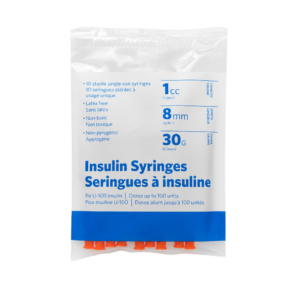
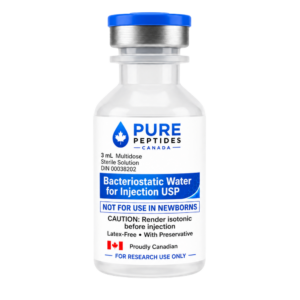
- Easy to keep a supply in a reconstitution kit alongside bacteriostatic water, syringes and vials
- Low-cost consumable that removes an avoidable contamination risk from every reconstitution
Specifications
| Detail | Value |
|---|---|
| SKU | PP-ALCOHOL-SWABS |
| Active solution | 70% isopropyl alcohol |
| Pad material | Lint-free nonwoven |
| Packaging | Individually sealed sachets |
| Use | Single use, then discard |
| Category | Laboratory accessories and consumables |
| Intended use | Research and laboratory handling only |
Typical applications
- Wiping the rubber stopper of a lyophilized peptide vial before inserting a needle
- Wiping the stopper of a bacteriostatic or sterile water vial before drawing diluent
- Cleaning the immediate bench area or work surface before setting out reconstitution supplies
- Wiping down the exterior of vials, tools and small equipment between handling steps
- Included in a prepared reconstitution kit so everything needed is together at the point of use
Important information
- Allow the alcohol to air dry on the stopper before piercing it — wiping and immediately puncturing defeats the purpose, and the surface needs contact time.
- Use a fresh pad for each surface. A pad that has already touched a bench should not go near a vial septum.
- Isopropyl alcohol is flammable. Keep pads away from open flames, hot plates and ignition sources, and store the box in a cool, dry place out of direct sunlight.
- Keep sachets sealed until the moment of use. A torn or open sachet will dry out and should be discarded.
- Alcohol pads sanitize a surface — they do not sterilize a solution or a vial’s contents, and they are not a substitute for aseptic technique.
- Research use only. This is a laboratory consumable and is not supplied for human or veterinary use.
Common questions
Why 70% and not 99% isopropyl alcohol?
70% is the standard concentration for surface disinfection. Higher-concentration alcohol evaporates faster, which shortens the contact time on the surface. The 70% dilution stays wet longer, which is why prep pads are made at that strength.
How long should I let the stopper dry?
Let the alcohol air dry on its own rather than fanning or wiping it off. Drying time is short, and the surface needs that wet contact period to be effective. Piercing the septum while it is still wet can carry alcohol into the vial.
Can I use one pad for the whole reconstitution?
Use a separate pad for each surface. One for the peptide vial stopper, one for the diluent vial stopper, and another for the bench. They are single-use consumables and reusing one moves contamination around rather than removing it.
Are these lint-free?
Yes. The nonwoven pad does not shed fibres onto the stopper or the work surface, which matters when a needle is about to pass through the area you just wiped.
Do I still need alcohol swabs if the vial is sealed?
Yes. The flip-cap protects the stopper during shipping and storage, but the rubber septum underneath is still an exposed surface once the cap is removed, and the needle passes directly through it.
How should I store them?
Keep the sachets sealed in a cool, dry place away from direct sunlight and any heat or ignition source. Isopropyl alcohol is flammable, and sealed storage is what keeps the pads saturated until you need them.
In summary
A basic consumable that does one job properly: 70% isopropyl alcohol on a lint-free pad, sealed individually so it is fully wet the moment you open it. Keep a supply wherever reconstitution happens and there is one fewer variable in your handling.
Reviews
There are no reviews yet.