
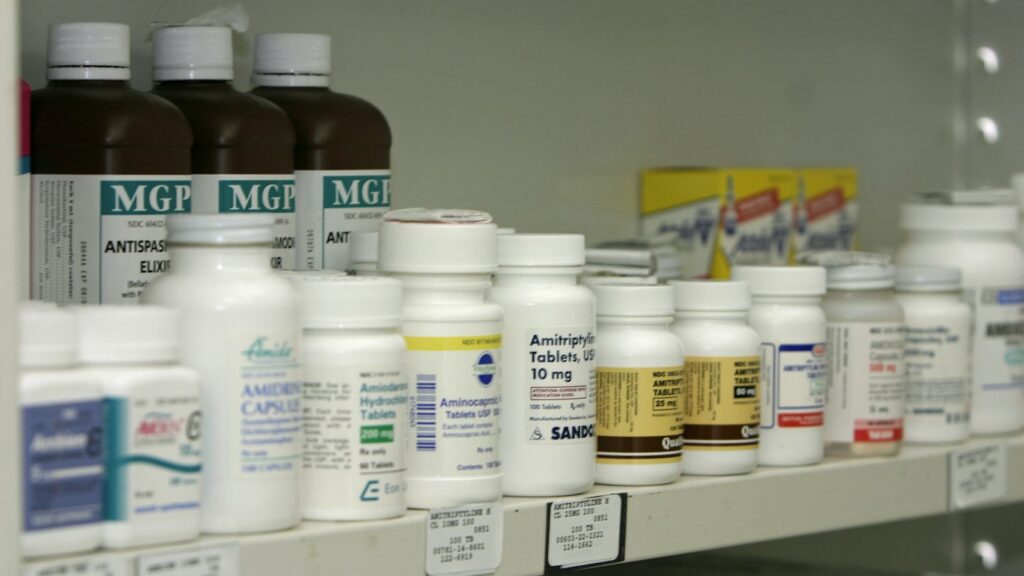
Pick up any prescription or over-the-counter medicine in a Canadian pharmacy and you will find an eight-digit number on the label: the DIN. It is one of the simplest tools Canadians have for knowing what a health product is, and what it is not. This guide explains what a DIN means, how it differs from the NPN on natural health products, how to look one up, and why laboratory research reagents, including research peptides, do not carry one.
The short answer
- A DIN, or Drug Identification Number, is an eight-digit number Health Canada assigns to a drug product before it can be marketed in Canada.
- It appears on the label of prescription and over-the-counter drugs that have been evaluated and authorized for sale, and it identifies the manufacturer, product name, active ingredients and their strengths, dosage form and route of administration.
- Natural health products carry an NPN, or Natural Product Number, instead, and homeopathic medicines a DIN-HM.
- Any DIN can be checked in Health Canada’s public Drug Product Database, and NPNs in the Licensed Natural Health Products Database.
- Research reagents are not authorized drugs and have no DIN. A DIN tells you a product is authorized for its labelled use; a certificate of analysis tells you what is in a reagent vial. They answer different questions.
The DIN at a glance
Drug Identification Number, issued by Health Canada
- Format
- Eight digits, often with a leading zero
- Issued
- When Health Canada authorizes a drug for sale
- Found on
- The label of authorized prescription and non-prescription drugs
- Identifies
- Manufacturer, product name, active ingredients, strengths, dosage form, route
- Look it up
- Health Canada’s Drug Product Database
What a DIN is
A Drug Identification Number is a computer-generated eight-digit number that Health Canada assigns to a drug product before it can be sold in Canada. It is issued once Health Canada has reviewed and authorized the product, and it uniquely identifies the product’s key characteristics: who makes it, what it is called, which active ingredients it contains and at what strengths, its dosage form and how it is taken or applied.
For new drugs, authorization comes with a Notice of Compliance as well as a DIN. If any of the characteristics above change, a different DIN is needed, which is what makes the number a precise identifier rather than a general approval stamp.
Why the DIN matters
The DIN is how the system keeps track of authorized drugs once they are on the market. Health Canada uses it to follow up on products, manage recalls, plan inspections and monitor quality. For a consumer or a pharmacist, it is a quick way to confirm that a product on the shelf is the one Health Canada reviewed. Under Canadian law, a product that meets the definition of a drug must not be sold without one.
For research reagents, the evidence that matters is the batch certificate.
How to read a COADIN vs NPN vs DIN-HM
| Number | Used for | Framework | Where to check it |
|---|---|---|---|
| DIN | Prescription and non-prescription drugs | Food and Drugs Act and Food and Drug Regulations | Drug Product Database |
| NPN | Natural health products, such as vitamins and herbal remedies | Natural Health Products Regulations, via a product licence | Licensed Natural Health Products Database |
| DIN-HM | Homeopathic medicines | Natural Health Products Regulations | Licensed Natural Health Products Database |
All three are eight-digit numbers, which is why they are easy to confuse. What they share is the core message: Health Canada has assessed and licensed the product for sale under the framework that applies to it.
How to check a DIN
- Find the numberLook for “DIN” followed by eight digits on the outer label.
- Search the databaseEnter it in Health Canada’s Drug Product Database, which is free and public.
- Compare the detailsCheck that the manufacturer, product name, active ingredient and strength match the product in your hand.
- Check the statusThe database shows whether the product is marketed, and links to related information.
- For natural productsSearch an NPN or DIN-HM in the Licensed Natural Health Products Database instead.
Health Canada also publishes recalls and safety alerts, which are worth checking for any medicine you buy.
Why research reagents have no DIN
A DIN is tied to a drug product that has been evaluated for its labelled use in people. Laboratory research reagents, including the research peptides we supply, are not drug products: they are sold for in-vitro and other laboratory research, are not presented in a dosage form for human use, and have not been evaluated or authorized by Health Canada as drugs. So they carry no DIN, and they must not be used as medicines. For the wider legal picture, see our answers to the questions Canadians ask on Reddit about whether peptides are legal in Canada.
That does not leave a researcher without evidence. For a reagent, the relevant question is not “has this been authorized as a drug?” but “is this vial what it says it is, at the stated purity?” That is answered by a batch-specific certificate of analysis: identity by mass spectrometry and purity by HPLC. Our guides to the peptide COA, HPLC testing and spotting fake or underdosed peptides explain how to read that evidence, and our overview of research peptides in Canada covers the research-use-only framework.
Common misconceptions
Misconception
- A certificate of analysis is the same as a DIN.
- An NPN means a product is a drug.
- A product approved in another country is authorized in Canada.
- Every eight-digit number on a label is a DIN.
Reality
- A COA documents a batch’s identity and purity; a DIN records that Health Canada authorized a drug product.
- An NPN is a licence under the separate natural health products framework.
- Canadian sale of a drug needs Canadian authorization and a DIN.
- Check the prefix: DIN, NPN or DIN-HM, then confirm it in the right database.
Research reagents, not drugs
Everything in our catalogue is sold as a laboratory research reagent. None of the products below carries a DIN or NPN, none is for human or veterinary use, and each has a Janoshik test report listed on our Lab Testing page.
 BPC-15715-amino-acid research peptideView product
 GHK-CuCopper tripeptideView product
 TB-500Thymosin beta-4 research peptideView product
 KPVLys-Pro-Val tripeptideView product
Research use only. Pure Peptides Canada supplies laboratory reagents that are not authorized drugs and are not for human or veterinary use. This article is general information about Canadian product identification numbers and is not legal or regulatory advice; for authoritative guidance, consult Health Canada.
Frequently asked questions
What is a DIN number?
A DIN, or Drug Identification Number, is an eight-digit number that Health Canada assigns to a drug product before it can be marketed in Canada. It appears on the label of authorized prescription and over-the-counter drugs.
What does a DIN tell you?
It tells you Health Canada has evaluated and authorized the product for sale, and it uniquely identifies the manufacturer, product name, active ingredients and their strengths, dosage form and route of administration.
What is the difference between a DIN and an NPN?
A DIN identifies an authorized drug under the Food and Drug Regulations. An NPN, or Natural Product Number, identifies a licensed natural health product under the Natural Health Products Regulations. Homeopathic medicines carry a DIN-HM.
How do I check a DIN?
Search the number in Health Canada’s free Drug Product Database and confirm that the manufacturer, product name, active ingredient and strength match the product. NPNs and DIN-HMs are checked in the Licensed Natural Health Products Database.
Do research peptides have a DIN?
No. Research peptides are laboratory reagents sold for research, not drug products authorized for human use, so they have no DIN and must not be used as medicines. For a reagent, the relevant evidence is a batch-specific certificate of analysis.
Is a DIN the same as a certificate of analysis?
No. A DIN records that Health Canada authorized a drug product for sale. A certificate of analysis is a laboratory report on a specific batch, showing its identity and purity.
Know what is in the vial
Research reagents with Janoshik certificates listed by batch, priced in Canadian dollars and shipped tracked from inside Canada.
References
- Health Canada. Fact sheet: Drug Identification Number (DIN). Health Canada
- Health Canada. Drug Product Database.
- Health Canada. Licensed Natural Health Products Database.
- Food and Drug Regulations (C.R.C., c. 870), section C.01.014.
For laboratory research use only. Not for human or veterinary use. This article is general information and is not legal or medical advice.