Research Library
The research library
Plain-English guides on purity, certificates, storage and sourcing — written to inform researchers and built to rank in search & AI answers.
 Anti-Aging & Cellular Research
October 8, 2026
Telomeres and telomerase explained: how chromosome caps shorten, the enzyme that rebuilds them, why longer isn't always better, and Epitalon's claims.
Read article
 Growth & Signaling Research
October 8, 2026
Ghrelin explained: the 28-amino-acid stomach hormone found in 1999, why it needs a fatty-acid tag, how it drives hunger and GH release, and the GHRP link.
Read article
 Buying in Canada
October 8, 2026
What a DIN number is: Health Canada's eight-digit Drug Identification Number, how it differs from an NPN, and why research reagents don't have one.
Read article
 Metabolic Research
October 7, 2026
GIP explained: the 42-amino-acid gut hormone discovered at UBC, how it boosts insulin, why it was renamed, and how tirzepatide and retatrutide target its receptor.
Read article
 Testing & Quality
October 7, 2026
How to read peptide research: what cell, animal and human studies can and can't show, why mouse results often fail in people, how to read a paper, and red flags in peptide claims.
Read article
 Metabolic Research
October 7, 2026
Retatrutide's phase 3 TRIUMPH results explained: weight loss across four trials, the dysesthesia signal, discontinuation rates, cardiovascular data and what comes next.
Read article
 Anti-Aging & Cellular Research
October 7, 2026
Thymus peptides explained: how the thymus shrinks with age, and what research shows for thymosin alpha-1, zinc-dependent thymulin, the dipeptides thymogen and Vilon, and thymalin.
Read article
 Growth & Signaling Research
October 7, 2026
IGF-1 LR3 explained: the 83-amino-acid IGF-1 analogue built in Adelaide for cell culture, why it escapes binding proteins, what it's used for, and sourcing in Canada.
Read article
 Testing & Quality
October 7, 2026
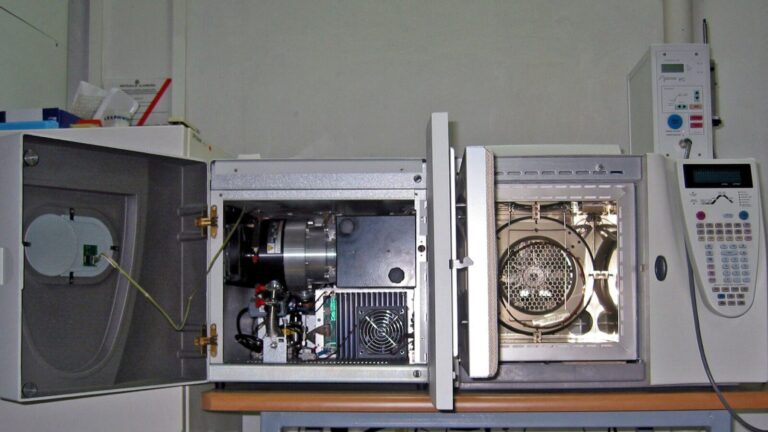
How to read a peptide mass spectrum: what m/z means, why one peptide shows several peaks, isotope spacing, deconvolution, adducts, and what mass spec can't tell you.
Read article
 Anti-Aging & Cellular Research
October 6, 2026
MOTS-c explained: the 16-amino-acid peptide encoded in mitochondrial DNA, its AMPK and exercise research, what human data exist, and sourcing in Canada.
Read article